
The common thread was the Sustainable Debrecen Award — which is precisely why green thinking was the focus of the panel discussion. And, in keeping with the programme's title, this session looked not only at the present but at the future.
Sharing the stage with István Gulyás at the Csokonai Fórum were Gréta Rácz, Managing Director of Green Drops Farm Kft., Réka Makray, HR Director of Vitesco Technologies Hungary Kft., Sándor Szabó, Deputy CEO of Szinorg Universal Zrt., and Péter Szabó, Managing Director of Schaeffler Debrecen Kft.
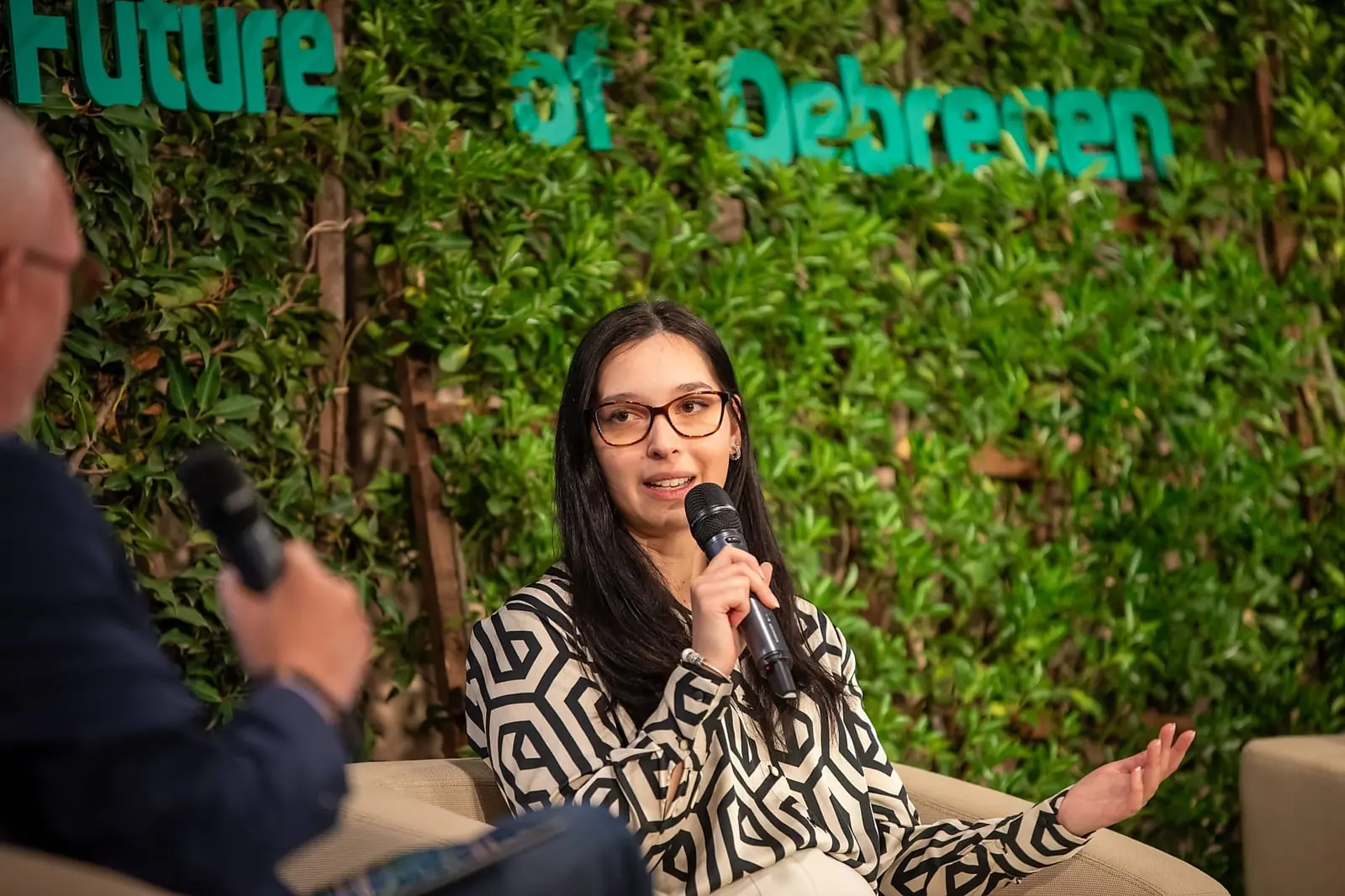
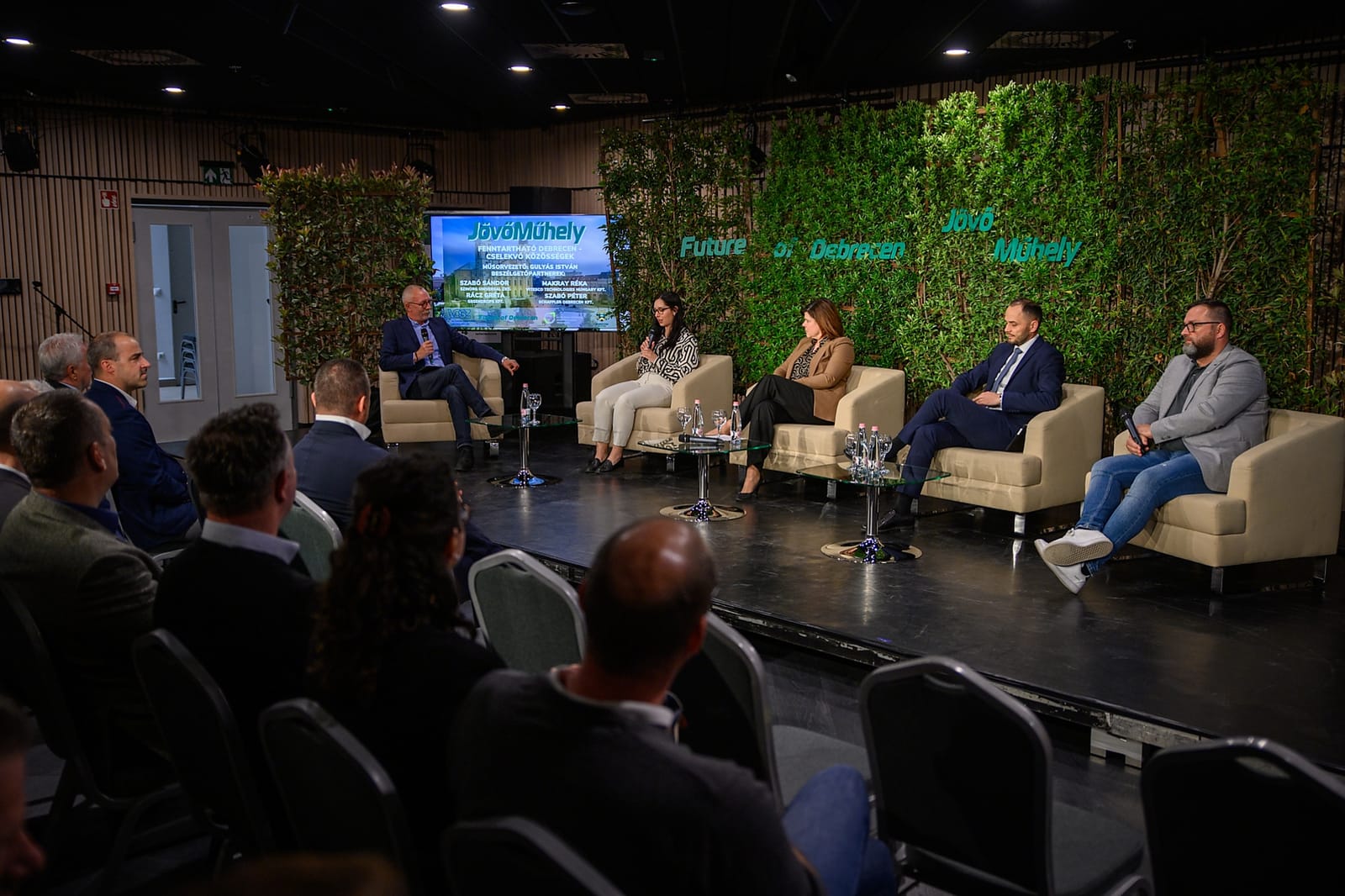
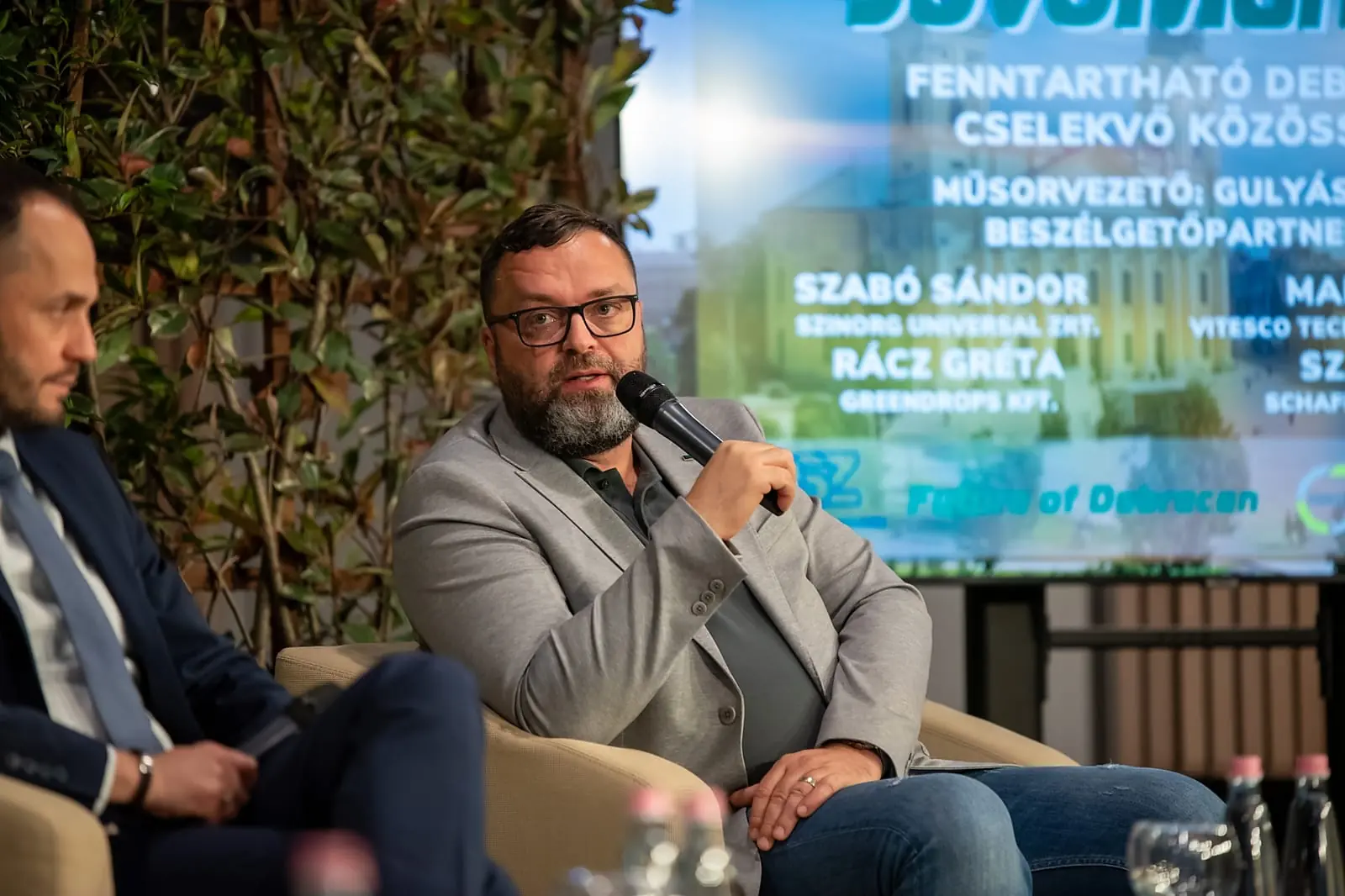
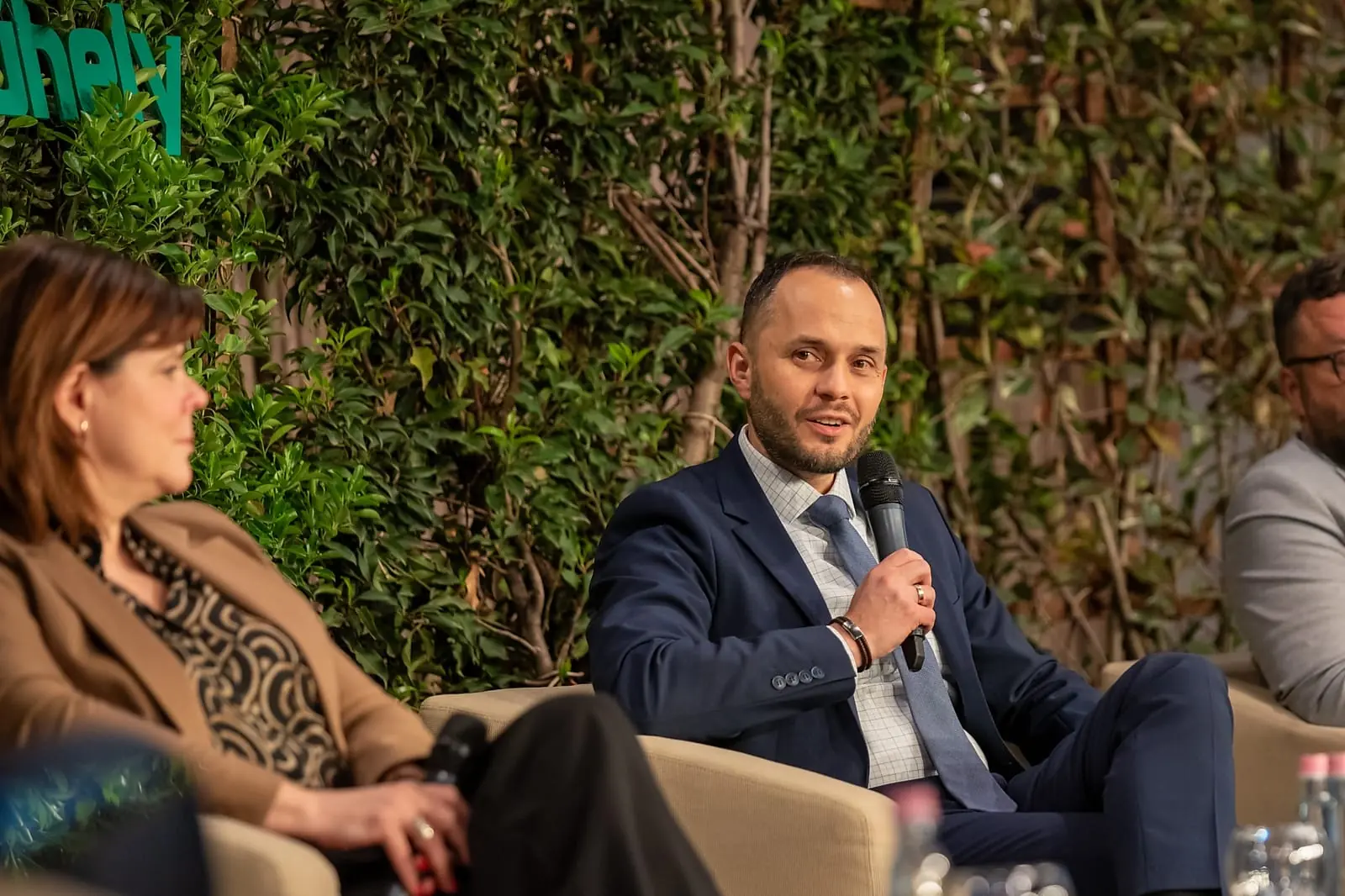
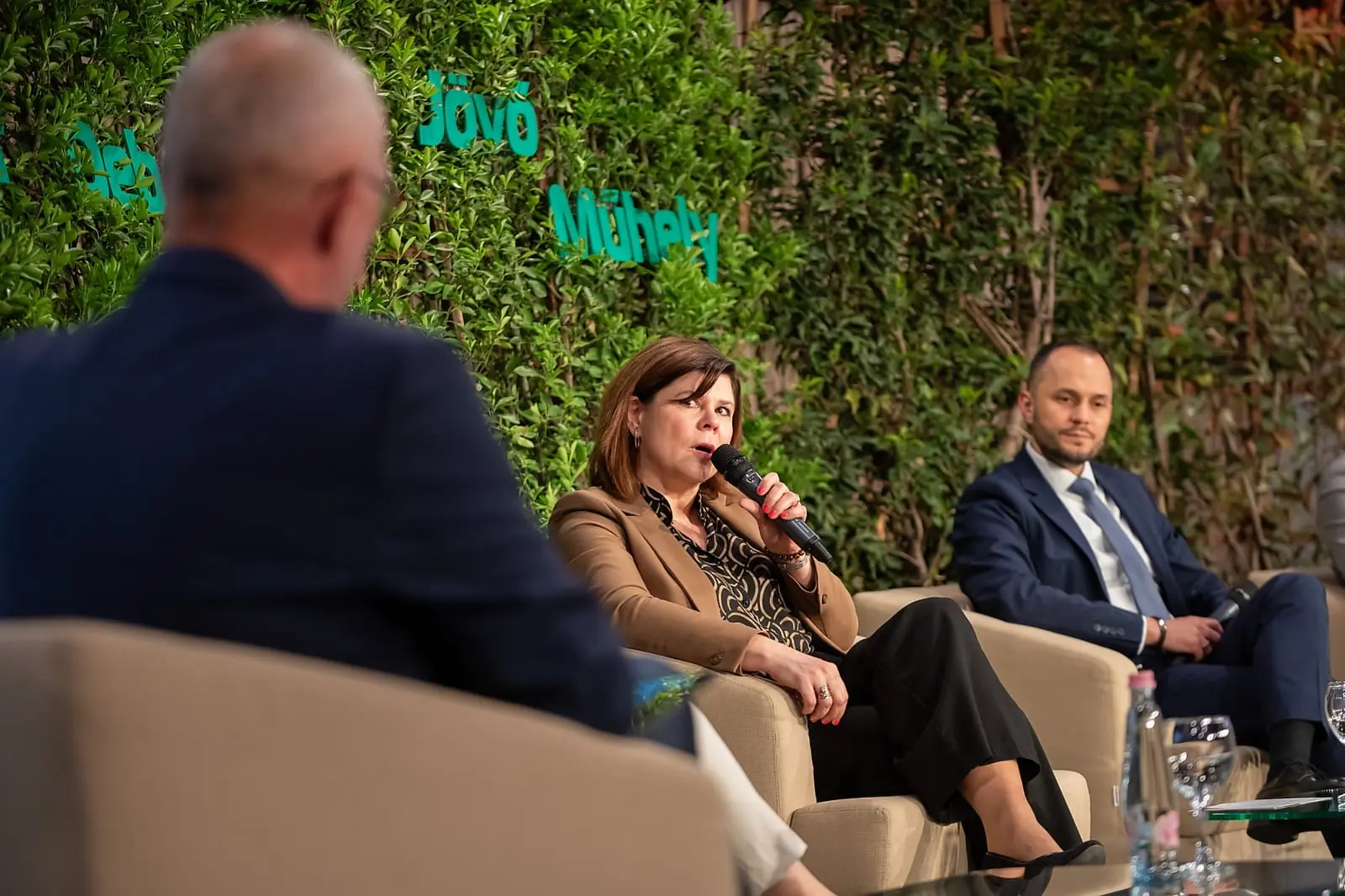
Source: dehir.hu
Thinking and operating in a greener way is not straightforward. According to the participants, it has presented companies with challenges on several fronts.
In most places, motivating the community is a priority — getting employees to act for a "greener world". At Vitesco Technologies Hungary Kft. a points system was devised to that end.
Colleagues earn points for cycling to work, or for shopping at packaging-free stores.
And, as Réka Makray put it, all manner of things beginning with E can be won (an e-scooter, for instance). The company also organises a number of themed events to shape attitudes.
They have set themselves the target of being able to claim carbon neutrality by 2026, and are doing everything towards it: smart buildings, and a solar park planned for next year. Their mission is clean mobility.
At Schaeffler Magyarország Kft., by contrast, it has been the technical transition that had — and still has — to be thought through continuously.
But the company already has solutions clever enough that the water in the showers and the heating in the offices are both provided by heat generated by the machinery.
The main consideration in any technological change, according to Managing Director Péter Szabó, is how long it takes for a given switch to pay back, since it also means capital expenditure. Their ceiling is two years.
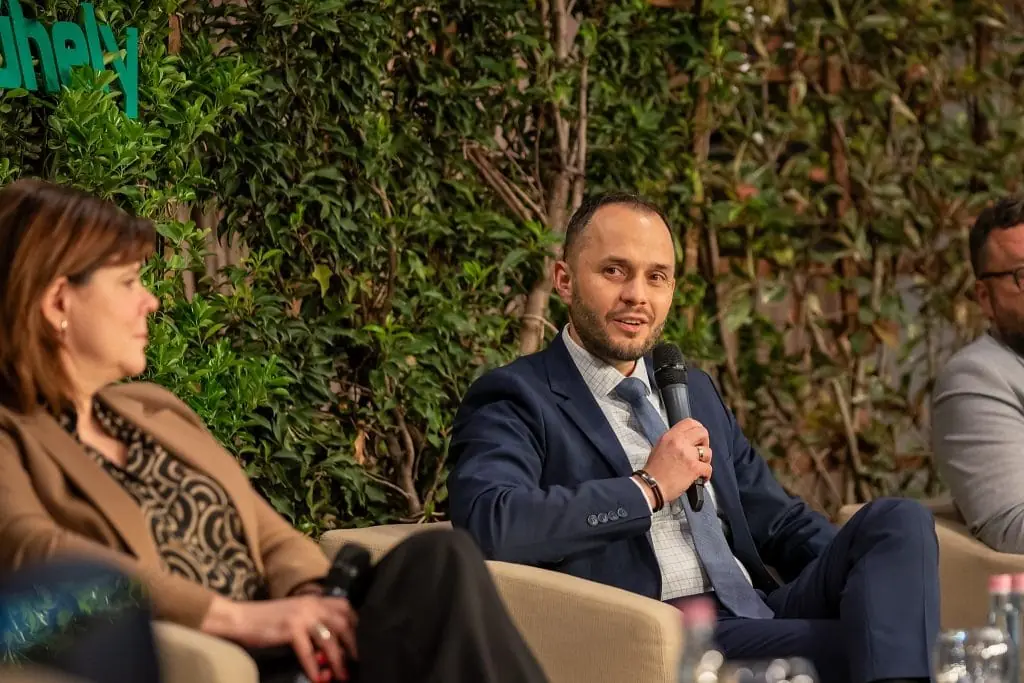
Source: dehir.hu
That naturally raised the question of cost, and what is worth doing. Sándor Szabó, Deputy CEO of Szinorg Universal Zrt., pointed out that the difficulties of recent years have accelerated the shift to green. The energy crisis sounded a green alarm. In the post-Covid period, during the crisis, those who had previously invested in energy efficiency were not the ones losing sleep. Making green investment more accessible to smaller businesses could be an important task for economic development.
Green thinking may not convert directly into cash, but a good idea, well executed, can save a great deal.
It is true that in the long run the market decides what there is demand for, but it is worth bearing in mind that where a trend once held for twenty years, life now changes quickly. The Earth is not turning, it is spinning. And the pace has to be kept up.
Debrecen has set itself an important goal: the city wants to become European Green Capital. The JövőMűhely also discussed the important steps the corporate sector can take towards it. Gréta Rácz feels it is currently very hard to find people for basic tasks such as sowing. In her view, if more community gardens were established, the growing process could be experienced collectively — and there is an educational opportunity in that too. That gardening, and gardening together, also benefits mental health is a bonus.
Vitesco Hungary Kft. may soon open a marketplace, where shopping days would be organised.
Local growers could sell there. They believe in holding idea exchanges, because young people can bring an entirely different outlook to protecting the environment.
Sándor Szabó suggested it would be worth getting the energy specialists of small, medium and large companies together. There would be no question they could not find a creative answer to. Péter Szabó picked up on that: at their company an issue had arisen in that, although production runs Monday to Friday, the solar park does not rest at weekends. They would like to use that energy too — giving it to a neighbour, as he put it.
There is already an idea for the surplus water: the company's staff came up with an in-house free car wash.
These solutions may still seem novel, but an important objective is that even the youngest should grow up in Debrecen with environmental protection as a matter of course.
Panellists:
Sándor Szabó, Deputy CEO, Szinorg Universal Zrt.
Gréta Rácz, Managing Director, Green Drops Farm Kft.
Péter Szabó, Managing Director, Schaeffler Debrecen Kft.
Réka Makray, HR Director, Vitesco Technologies Hungary Kft.
Moderated by: István Gulyás, editor and presenter.